Yakuza Tattoos Carved into Classical Marble Sculptures by Fabio Viale
- 1月28日
- 読了時間: 2分





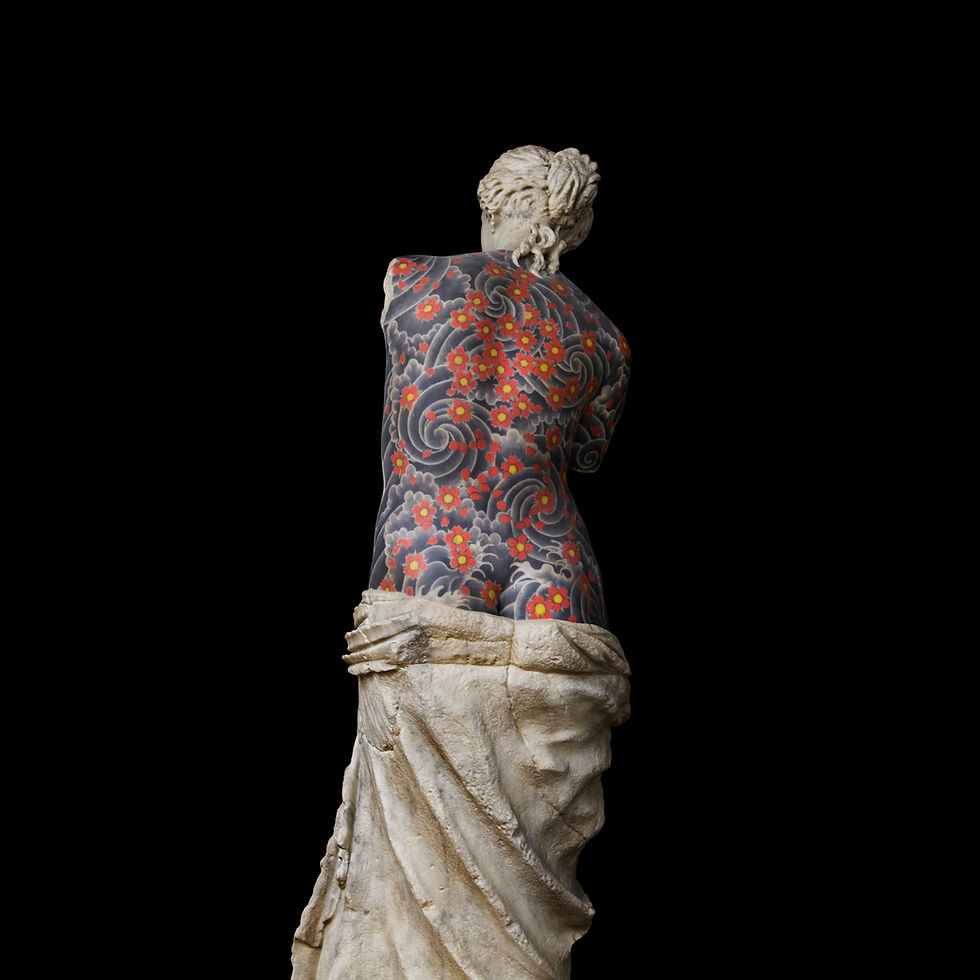
White, smooth, and timeless—marble has long stood as the ultimate symbol of classical beauty. Yet on the surface of these sculptures, vivid tattoos appear—motifs that evoke Japanese yakuza culture.
Italian contemporary sculptor Fabio Viale confronts the authority of classical sculpture by carving modern bodily expressions directly into marble, unsettling our most deeply rooted assumptions about beauty.
Were Classical Sculptures Ever Truly “White”?
At first glance, Viale’s works provoke immediate discomfort. Perfectly proportioned bodies reminiscent of Greco-Roman sculpture are covered in colorful tattoos—an image that feels almost sacrilegious.
But history tells a different story. Ancient sculptures were originally polychrome, painted in rich colors. The idea of pure white classical beauty is largely a construct shaped by later Western aesthetics.
Viale acknowledges this historical truth—and chooses tattooing as the contemporary equivalent of color.

Why Japanese Tattoos?
Among the motifs carved into marble are traditional Japanese tattoos often associated with yakuza culture: dragons, chrysanthemums, and oni masks.
These tattoos are not treated as symbols of criminality. Rather, Viale approaches them as a radical form of bodily language—visual systems through which identity, loyalty, and personal philosophy are permanently inscribed onto the body.
By placing these tattoos onto idealized classical figures, Viale transforms abstract beauty into something lived, social, and deeply human.

Contemporary Meaning, Etched in Marble
Marble represents permanence and immortality. Tattooing, by contrast, is inseparable from the mortal body—it ages, fades, and disappears with its bearer.
Viale deliberately fuses these opposing qualities. The result is a sculptural space where past and present, high art and subculture, idealism and lived experience coexist without hierarchy.
These works do not simply modernize classical sculpture. They insert contemporary culture directly into the lineage of art history.

Reading Fabio Viale from a Japanese Perspective
For much of its history, Japanese tattoo culture has existed at society’s margins. Yet today, its visual power and craftsmanship are being reassessed across art and fashion.
Viale’s sculptures do not exoticize Japanese culture. Instead, they bring the intensity of Japanese bodily expression into the very core of European sculptural tradition.
The tattoos carved into marble are not acts of collision, but of reflection—quietly revealing how cultures illuminate one another.